
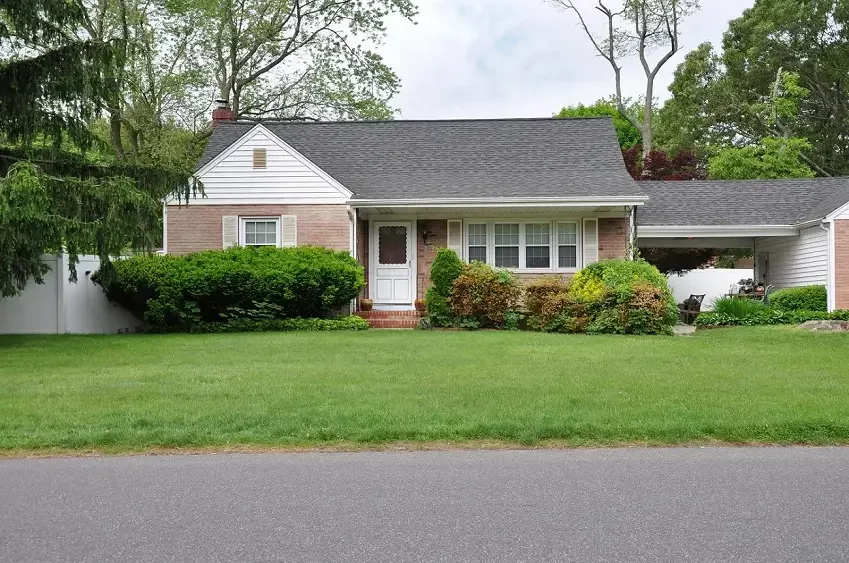
Selling a home for cash can be a fast and convenient way to convert your real estate into liquidity — especially in situations such as downsizing, relocation, financial pressure, or property distress. However, whether you receive cash or go through a traditional sale, the tax implications remain largely the same. If your property is located in Elkins Park, PA (or anywhere in Pennsylvania), it’s important to understand both federal and state-level tax considerations before proceeding. This article explains what sellers need to know — from capital gains and exclusions to filing requirements and strategies to minimize taxes.
What Does “Selling a House for Cash” Mean — and Does It Affect Taxes?
Definition and Distinction
- Cash sale simply means that the buyer pays in cash (or cash-equivalent funds), and there is no mortgage financing involved.
- Importantly: from a tax perspective, a cash sale is treated the same as a financed sale. What matters is the sale price and the basis (purchase price + improvements), not the method of payment.
Why People Sell for Cash
- Faster closing, often within days or weeks.
- No need for extensive repairs or upgrades — attractive for homeowners with distressed or as-is properties.
- Avoid mortgage underwriting delays, appraisal contingencies, or financing fall-throughs.
Bottom line: Cash sale ≠ tax-free. The same tax rules apply as with traditional sales.
Federal Tax: Capital Gains on Sale of Main Home
When you sell your home in the U.S., profits generally are subject to federal capital gains tax. However, there are favorable provisions for most homeowners under Internal Revenue Code Section 121 (home sale exclusion).
What is Capital Gain?
Capital gain = Sale Price — Adjusted Basis (original cost + improvements + certain adjustments).
Example
You bought a home 10 years ago for $200,000. Over the years, you added $30,000 of qualifying improvements. If you sell today for $350,000, your capital gain before exclusions is roughly:
$350,000 — ($200,000 + $30,000) = $120,000
Home Sale Exclusion — $250,000 / $500,000 Rule
- If you meet eligibility criteria, you can exclude up to $250,000 of gain (single filer) or $500,000 (married filing jointly).
- Eligibility requires that the house was your primary residence for at least 2 of the last 5 years before the sale.
- The two years don’t have to be continuous; they just need to total 24 months within the 5‑year window.
What If Your Gain Exceeds Exclusion Limit?
Any gain beyond the exclusion threshold is subject to long-term capital gains tax (assuming you owned the home > 1 year). Currently, long-term capital gains rates are 0%, 15%, or 20%, depending on your overall taxable income and filing status.
When Exclusion Doesn’t Apply
You may owe tax if:
- The house was not your primary residence (e.g., rental, vacation home, investment property).
- You do not meet the 2-in-5-years use test.
- You already claimed the exclusion on another home sale in the last 2 years.
For more information on the rules around capital gains tax, visit the IRS Capital Gains Tax.
State Tax: Selling a House in Pennsylvania — What PA Requires
If your house is in Elkins Park, PA, you must also account for Pennsylvania’s state-level tax laws.
Pennsylvania Personal Income Tax on Gains
- In Pennsylvania, gains from selling real estate are taxed under the classification “Net gains or income from the disposition of property.”
- Pennsylvania does not distinguish between short-term or long-term gains for real estate — all gains are taxed the same.
- The tax rate is a flat 3.07% on net gains for individuals.
What “Net Gain” Means in PA
Net gain = Amount realized (sale price minus allowable selling costs) minus adjusted basis (purchase price + improvements; minus depreciation if applicable).
If the property was personal-use (i.e., your primary home), then any loss from sale generally cannot be claimed for PA tax purposes.
Transfer Taxes (Where Applicable)
- In Pennsylvania, home sales may also trigger a real estate transfer tax (state-level and possibly municipal).
- These are typically separate from capital gains tax and are based on the sale price, not the gain.
For more details on Pennsylvania’s state-level tax laws, visit the Pennsylvania Department of Revenue website.
Combined Tax Scenario — What a Seller in Elkins Park Might Face
To make this concrete, let’s walk through a hypothetical example of selling a main home in Elkins Park, PA, for cash.
| Description | Value / Detail |
|---|---|
| Purchase Price (original) | $200,000 |
| Qualified Improvements (over years) | $30,000 |
| Adjusted Basis | $230,000 |
| Sale Price (cash sale) | $400,000 |
| Selling Costs / Closing Costs / Commissions | $10,000 |
| Net Proceeds (amount realized) | $390,000 |
| Capital Gain (federal basis) | $390,000 − $230,000 = $160,000 |
| Exclusion (if qualified) | $250,000 (single) or $500,000 (married) — entire $160,000 excluded (if single and qualify) |
| Federal Capital Gains Tax | $0 (if exclusion applies) |
| Pennsylvania Taxable Gain | $160,000 (if no state-level exclusion) |
| PA Tax (3.07%) | $4,912 |
Key outcome: Even with a cash sale and a large home‑sale profit, a seller who qualifies under the federal home‑sale exclusion might owe nothing federally — but will still owe PA state tax at 3.07% on the gain, unless further adjustments or deductions apply.
Exemptions, Deductions & Basis Adjustments
Federal: Primary Residence Exclusion (IRC §121)
As covered, the main tool for avoiding federal tax on the sale of your home is the home‑sale exclusion: $250,000 (single) / $500,000 (joint).
Requirements:
- Home must have been your primary residence for at least 2 of the last 5 years before sale.
- Cannot have excluded gain on another home sale in the past 2 years.
Adjusted Basis — What You Can Add to It
Increasing your basis reduces taxable gain. Eligible adjustments include:
- Capital improvements (e.g., new roof, room additions, major renovations).
- Certain acquisition costs and costs associated with buying the home.
Selling Costs — What You Can Subtract From Sale Price
When calculating “amount realized,” subtract legitimate selling expenses like:
- Real estate agent commissions
- Title company fees
- Closing costs paid by seller
These reduce your net proceeds, thereby lowering gain.
Special Considerations & Common Pitfalls for Sellers in Elkins Park, PA
While the above covers typical scenarios, real-world sales often include complexities. Here are issues sellers frequently overlook:
1. Not the Primary Residence
If the house was used as a rental, investment property, vacation home, or if you moved out years ago, the federal home‑sale exclusion may not apply. Gain may be fully taxable.
2. Short Ownership or Recent Purchase
If you owned the property less than a year before selling, IRS treats the gain as short-term capital gain, taxed at ordinary income rates — which can be much higher than long-term rates.
3. Recent Home Sale Using Exclusion
If you already used the home sale exclusion on another home in the past 2 years, you may not qualify again.
4. Failing to Maintain Records
Without documentation of original purchase price, improvements, and closing costs, you may miss basis adjustments — that could increase your taxable gain.
5. Pennsylvania Transfer Tax & Local Requirements
Beyond income tax on gain, there may be real estate transfer taxes (state or municipal) due at sale, which are separate from capital gains tax.
How to Report the Sale — What Forms & Where to Include the Gain
Federal (IRS) Reporting
If you sell your home and:
- The gain is excludable under Section 121 → you generally don’t need to report it on your tax return (unless you receive a reporting form like Form 1099-S).
- Or if gain exceeds the exclusion → you must report the sale using Form 8949 and Schedule D (Form 1040).
Pennsylvania (State) Reporting
- Gains from sale must be reported under PA personal income tax class “disposition of property.”
- Use PA Schedule D if required.
- If you have losses on personal-use real estate (rare), note that PA does not allow deduction of such losses.
Strategies to Minimize Tax Liability — What Sellers Should Consider
If you’re preparing to sell a home in Elkins Park, here are legal and practical strategies to reduce taxes you owe:
- Ensure the property qualifies as your primary residence — live there at least 2 of the last 5 years, so you can leverage the federal exclusion.
- Maximize your basis — keep thorough records of all capital improvements and allowable acquisition/selling expenses.
- Subtract selling-related costs from sale proceeds — commission, closing costs, legal fees, etc., all reduce the net gain.
- Time your sale carefully — if you’ve sold another home recently, wait 2 years before using the exclusion again.
- Consider state and local taxes separately — budget for Pennsylvania’s 3.07% tax on gain, and research any municipal transfer taxes or fees.
- Consult a tax professional — especially if there are complicating factors like prior rentals, partial rentals/occupancy, or substantial improvements.
Frequently Asked Questions (FAQs)
Q1. If I sell my house for cash, is that taxed differently than a financed sale?
No — cash vs. financed sale does not change the tax rules. Taxes are based on sale price, basis, and eligibility for exclusions.
Q2. Do I always owe capital gains tax if I sell my house at a profit?
Not necessarily. If your home qualifies as a primary residence and you meet the ownership/use tests, you may exclude up to $250,000 (single) or $500,000 (married) of gain under federal law.
Q3. What taxes do I owe if I sell a rental property in Elkins Park for cash?
Rental or investment properties do not qualify for the home sale exclusion. The entire gain (sale price minus basis) is taxable federally and subject to PA’s 3.07% income tax for gain.
Q4. If I lived in the house for 1.5 years and sold, can I still get a partial exclusion?
Possibly — in certain cases of unforeseen circumstances (job relocation, health, etc.), a partial exclusion may apply.
Q5. What records should I keep to support my tax filing?
Keep documents for: original purchase (price, date), capital improvements (invoices, permits), closing costs (both when bought and sold), selling costs, date of sale, sale price, and proof that the house was your principal residence (utility bills, voter registration, etc.).
Conclusion & Key Takeaways
- Selling a house for cash in Elkins Park, PA does not by itself avoid taxes; the sale is treated like any home sale.
- Federally, you may benefit from the home-sale exclusion (Section 121), which can exempt up to $250,000 (single) or $500,000 (married) of gain — if the home was your primary residence for at least 2 of the prior 5 years.
- Pennsylvania imposes its own tax on gains (3.07%), so even if you escape federal capital gains tax, you may still owe state tax.
- Keeping detailed records and working with a tax professional can help you maximize deductions, minimize taxable gain, and ensure compliance.
At Property Buyer Today, we are dedicated to helping homeowners in Elkins Park navigate the process of selling their homes for cash, including understanding the tax implications. If you’re considering selling your property, contact us today to get a fair, no-obligation cash offer and clear guidance on how to proceed with the sale.