
Selling a home is often stressful. Selling a home that has foundation problems can feel downright daunting. But the truth is — it’s possible to sell a house with foundation issues. Even in Willow Grove, PA, there are buyers — often investors or cash buyers — who are willing to purchase a home “as-is,” cracks and all.
What matters most is being informed, transparent, and strategic. In this article, we’ll walk you through: what counts as a foundation problem, how such issues impact a sale, what your obligations are under Pennsylvania law, and practical paths you can take to sell — whether you decide to repair first or sell as-is. By the end, you’ll have a clear, step-by-step roadmap tailored to your situation.
Understanding Foundation Problems
What Are Foundation Problems?
A house’s foundation forms the “base” on which everything else rests: walls, floors, roof — the whole structure. When the foundation shifts, settles, cracks, or fails, it affects the integrity of the entire home. Common foundation issues include:
- Cracks in the foundation walls or slab (vertical, horizontal, stair-step, zigzag)
- Uneven or sloping floors
- Doors or windows that no longer close properly or stick
- Walls that bow, bulge, or pull away from floor or ceiling
- Gaps between structural elements (e.g. between house and garage, porch, chimney leaning)
- Visible signs of water intrusion, moisture, basement dampness, or poor drainage around foundation
How Foundation Problems Affect a Home’s Value and Sellability
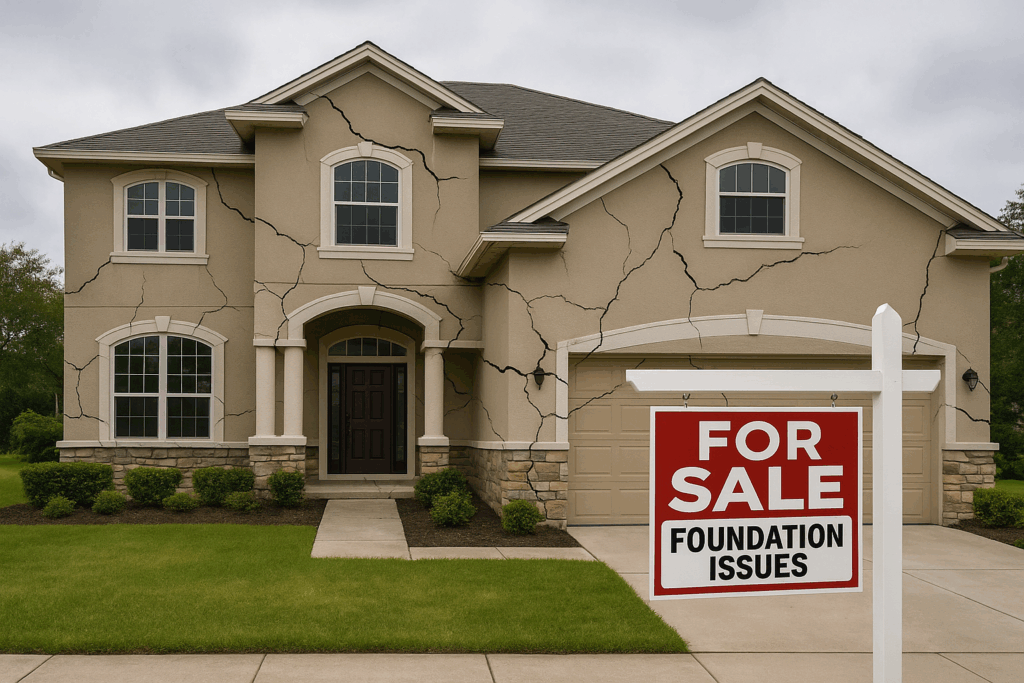
Foundation problems are usually considered “material defects” — meaning they have a significant adverse impact on a home’s value or safety. Because of this:
- Many traditional buyers — especially those financing with a mortgage — may be discouraged or unable to close. Lenders are often wary of financing homes with major structural issues.
- Home inspections may flag these issues, leading buyers to renegotiate price, request repairs, or even back out.
- Market value generally decreases. Homes with foundation issues often sell at a discount relative to comparable, problem-free homes.
- The sale may take longer because the pool of interested buyers narrows — traditional “move-in-ready” buyers tend to avoid risk, so you may need to target more specialised buyers.
Despite all this — you can sell. With the right approach and realistic expectations, homes with foundation problems find buyers.
Recognizing Signs of Foundation Problems — What Buyers & You Should Watch For
Before you list your home, it helps to document and understand precisely what you’re dealing with. Common signs include:
| Interior Signs | Exterior / Structural Signs |
|---|---|
| Cracks (vertical, diagonal, horizontal) in drywall around doors/windows, or in ceilings/floors | Cracks in foundation walls or slab (zigzag, stair-step, wide cracks) |
| Doors/windows sticking; failing to open/close properly | Gaps between house and garage/driveway; separation between porch/deck/house; chimney leaning or pulling away |
| Uneven, sloping, or sagging floors; slanted interior walls | Exterior walls bowing or bulging; siding or brickwork pulling apart; visible soil movement or water pooling near foundation |
| Cracks around baseboards, window frames, ceilings; walls pulling away from floors/ceilings | Damp crawl space / basement leaks / water infiltration; water stains around foundation or basement |
| Cabinets or doors that don’t stay closed; warped flooring or tiles separating | Uneven gaps between trim/door frames; visible settling or sinking in parts of the yard/house base |
If you notice one or more of these symptoms — it’s worth getting a professional inspection by a structural engineer or a qualified foundation contractor. That inspection helps you (and potential buyers) distinguish between cosmetic issues (e.g. hairline cracks, normal settling) and serious structural/foundation problems.
Legal Responsibilities in Pennsylvania: Disclosure Matters
Disclosure Requirements — What You Must Reveal
If you’re selling in Pennsylvania (as in Willow Grove, PA), you must comply with the state’s disclosure laws. Under the Real Estate Seller Disclosure Law (68 Pa. C.S.A. § 7301), sellers are required to provide a written disclosure statement to any prospective buyer. This includes known material defects — which explicitly covers foundation or structural problems.
Selling a home “as-is” does not absolve you from disclosing known problems. “As‑is” simply means you’re not making repairs — but you still must inform the buyer of any defects you know about.
For detailed information on the legal requirements for home sellers in Pennsylvania, including foundation issues, visit this Nolo page.
Risks of Not Disclosing: Why Honesty Matters
Failing to disclose known foundation issues can lead to serious consequences:
- Buyer may sue you for misrepresentation or fraud if defects emerge after closing and could have been known. Pennsylvania courts have enforced this: sellers who concealed structural issues have been held liable.
- The sale could be rescinded or renegotiated; you may need to compensate for repairs or damages.
- Even if you intend to sell as-is, withholding information damages your credibility and can close off potential buyers (especially investors) who want transparency before bidding.
Bottom line: always complete the required disclosure form. Be upfront about foundation problems. Transparency saves you legal headaches down the road.
Decide: Repair First or Sell As-Is?
Once you understand the condition of your home and your legal obligations, you’ll face a key decision: Should you repair the foundation before selling, or sell as-is (with foundation issues)? Both routes are viable — each with pros and cons.
Option A: Repair Foundation Problems Before Selling
Advantages:
- Makes the home more appealing to traditional buyers and lenders (which can increase demand).
- Likely to raise the sale price — depending on how extensive the repairs are, you may recoup some or all of your repair costs through a better sale price.
- Simplifies the buying process — less negotiation friction, smoother inspections, fewer contingencies.
Disadvantages / Considerations:
- Repair costs can be significant — foundation work is rarely cheap.
- Time — repairs + inspections + possible contractor delays add weeks or months before you can list.
- Risk-return tradeoff — if the value added by repair is lower than cost + time + hassle, you might end up spending more than you gain.
Option B: Sell As-Is (With Full Disclosure)
Advantages:
- Fast — no waiting on repairs. Ideal if you need to sell quickly (due to relocation, financial pressure, job change, etc.).
- Minimal upfront cost — you avoid paying for expensive structural repairs, contractors, permits, etc.
- Opens the door to a special pool of buyers: cash buyers, investors, house‑flippers, and buyers comfortable with renovation. These buyers often value location, lot size, or potential over current condition.
Disadvantages / Considerations:
- Lower sale price — because the buyer will factor repair costs into their offer.
- Smaller buyer pool — many traditional buyers with mortgages will avoid such properties.
- May take longer to find the right buyer (someone experienced or willing to take on renovations).
You need to weigh your timeline, available budget, and how much you care about maximizing the sale price. Sometimes a quick, as-is sale makes more sense.
For more on how to sell your home as-is, see Zillow’s Guide to Selling a House As-Is.
How to Sell a House As-Is with Foundation Problems (Step-by-Step)
If you decide to go the “as-is” route, here’s a practical roadmap to selling — even with foundation issues:
Step 1: Get a Professional Inspection & Documentation
- Hire a structural engineer or qualified foundation contractor to inspect and document the state of the foundation. This establishes a clear, factual baseline.
- If possible, request a written inspection report, including photos, estimated severity, and rough repair costs. This helps potential buyers understand what they’re buying and helps you avoid legal liability later.
Step 2: Fill Out the Required Disclosure — Honesty First
- Complete the state-required disclosure forms (per Pennsylvania law) detailing all known issues, especially foundation/structural problems.
- Mention that the sale is “as-is” but clarify that “as-is” refers to condition and repairs — not to information disclosure. The buyer should know exactly what they are getting.
Step 3: Set a Realistic, Discounted Price Based on Condition
Because foundation issues typically reduce market value, price your home with those deductions in mind. Some data from industry sources suggest a discount range between 10–40% depending on severity.
Example Pricing Table (for guidance only):
| Condition / Severity | Typical Discount vs. Market Value |
|---|---|
| Minor issues (small cracks, cosmetic) | –10% to –15% |
| Moderate issues (visible foundation cracks, some structural concerns) | –15% to –30% |
| Major / Severe issues (slab shifting, structural instability, heavy moisture) | –30% to –40%+ |
Use this as a rough benchmark — adjust based on location, home size, lot value (Willow Grove), and local real estate demand.
Step 4: Market to the Right Buyers — Investors, Flippers, Cash‑Buyers
Traditional buyers may shy away. Instead:
- Emphasize positives: location (Willow Grove proximity), lot size, potential after repair, layout, neighborhood — anything that adds value aside from the foundation.
- Indicate “as-is sale” in listing (but also mention that full disclosure will be provided). This helps attract investors / flippers / rehabbers who expect to do work.
- Provide inspection report and estimated repair costs — many experienced buyers appreciate transparency and will base their offer accordingly.
Step 5: Be Open to Negotiation, but Know Your Bottom Line
Expect offers lower than market value. Many buyers will want to negotiate further once they see the problem or after their own inspection. If you were transparent from the start and priced accordingly, you’re in a better position to stand firm.
Step 6: Prepare for a Possibly Longer Sale Timeline
Because buyer pool is smaller and many will inspect carefully, selling a home with foundation issues often takes longer than a typical market sale. Plan accordingly.
If You Consider Repair — What You Should Know
If you lean toward repairing foundation issues before selling, here’s what to keep in mind:
- Always get multiple quotes (at least 2–3) from licensed foundation repair contractors to compare methods and costs.
- Foundation repair is not cosmetic — it’s structural. In many cases, soil issues, drainage, moisture, or poor original construction are the root cause. Repairing without addressing root causes may lead to recurring problems.
- If repair is completed, document everything: inspection reports, repair receipts, contractor warranties, “after” photos, possibly a structural engineer’s certificate that the home is now sound. This helps reassure buyers and lenders during resale.
- Once repaired and properly documented, the home could be marketed as a “fixed-up home” rather than a “fixer-upper,” which broadens your potential buyer pool.
Why Cash Buyers / Investors Often Are the Best Fit
When dealing with foundation problems, cash buyers (or investors/flippers) tend to be the best match. Here’s why:
- Cash buyers don’t rely on mortgage lenders. Since lenders often balk at structural issues, cash transactions avoid financing red flags.
- They’re experienced with repairs — many seek “fixer-upper” opportunities and factor rehab costs into their offer. They expect a discount, so they’re more open-minded about foundation issues.
- They often close faster — as there is no need to wait for lender approval, appraisals, or extensive inspections. This is a big plus if you need to sell quickly.
- With transparent disclosure and realistic pricing, you can often still get a fair offer — even with discounted price, you avoid further repair costs, hold costs, and lengthy listing periods.
Frequently Asked Questions (FAQs)
Q1. Will foundation issues prevent me from selling my house in Willow Grove, PA?
No — foundation problems do not automatically prevent a sale. They make the sale more complicated, but with proper disclosure, realistic pricing, and targeted marketing (especially to investors or cash buyers), you can still sell.
Q2. Do I have to fix the foundation before selling?
Not necessarily. Selling “as-is” is a legitimate option. What matters legally is disclosing all known defects under Pennsylvania’s disclosure law.
Q3. How much will foundation repairs cost?
It varies widely depending on severity, type of foundation, and necessary remediation. Minor cracks might be inexpensive; major foundation shifting or structural problems can be very costly. Many sellers find that in severe cases, repair cost + time + effort does not justify the potential increase in sale price.
Q4. What discount can I expect when selling a house with foundation issues?
Discounts often range anywhere from 10% to 40% below “normal market value,” depending on severity, location, buyer interest, and whether the sale is as-is.
Q5. How long does it usually take to sell such a property?
Typically longer than a standard home sale. With a smaller buyer pool and additional due diligence from buyers, the process can take weeks or even months. That said, if you target investors or cash buyers, it may be faster than waiting for a traditional buyer willing to assume structural risk.
Tips & Best Practices for Selling a House with Foundation Problems in Willow Grove, PA
- Be honest and transparent. Always complete the required disclosure forms and include full details of any known foundation issues. Transparency builds trust and protects you legally.
- Get documentation. A professional inspection report — ideally from a structural engineer — with photos and severity assessment adds credibility and helps potential buyers understand exactly what they’re buying.
- Price for reality, not wishful thinking. Adjust price based on condition, potential repair costs for the buyer, and your local market. Discounts of 10–40% are common depending on severity.
- Market smart. Target investors, cash buyers, and home‑flippers — those who expect to do repairs and are comfortable with “as-is” sales. In your listing, highlight positives beyond structure: location, lot size, layout, neighborhood, potential upside after renovation.
- Be ready to negotiate. Expect lower offers and possible tough negotiations. If you’re transparent and priced fairly, you’re more likely to find a serious buyer.
- Have a bottom line — and stick to it. Know in advance what the lowest acceptable price is (after factoring potential repair costs). Don’t get emotionally attached — treating it as a business decision helps.
- Consider timing. If you need to sell quickly — because of relocation, financial pressures, or other reasons — an as-is sale to a cash buyer may be your best option. If time permits and you can cover repair costs, fixing major issues may yield a better return.
Conclusion: Yes — You Can Sell, but Strategy & Honesty Are Key
A house with foundation problems — even in a market like Willow Grove, PA — is not a dead end. It’s a challenge. But with the right strategy, transparency, and expectations, it’s possible to find a buyer.
Whether you choose to repair first or sell as-is depends on your financial position, timeline, and willingness to take on risk. If you go the “as-is + cash buyer / investor” route: document the problems, disclose them clearly, price fairly, and market to the right audience.
If you fix first: get solid contractor quotes, complete the work properly, document everything, then market like a standard home.
In either case — honesty, documentation, and realistic pricing are your friends. A foundation problem may affect the house’s base, but it doesn’t have to sink your sale. With clarity and transparency, you can still close the deal with Property Buyer Today.