
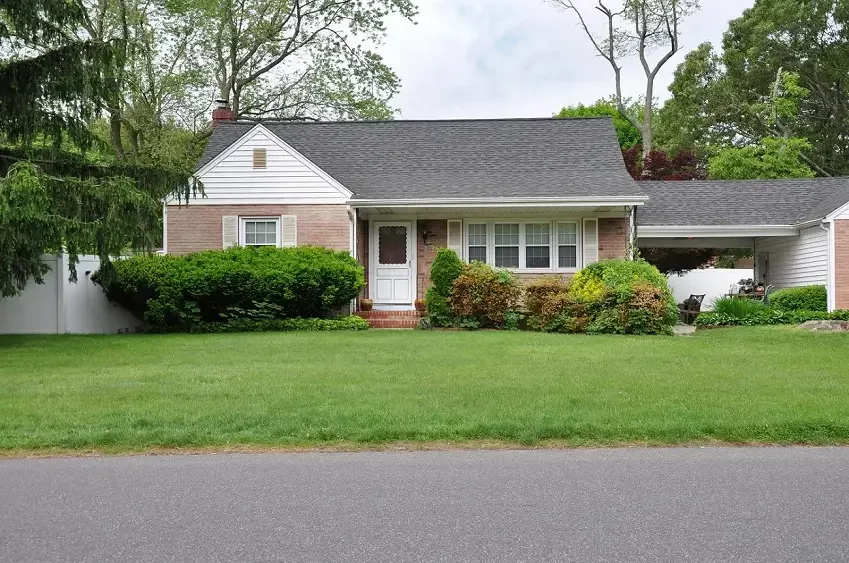
Selling your home in Pottstown, Pennsylvania can be a rewarding experience — especially if your property has appreciated in value over the years. But before celebrating your profit, there’s one crucial thing to consider: capital gains tax.
When you sell a house for more than you paid for it, the IRS may tax your profit as a capital gain. Many homeowners are surprised by this, especially when selling a longtime family home that’s significantly increased in value.
The good news is that there are several legal ways to reduce or completely avoid capital gains tax, especially if you live in your home as your primary residence. This article will explain, in detail, how capital gains tax works, who pays it, how it’s calculated, and the most effective strategies to avoid it when selling a house in Pottstown, PA.
What Is Capital Gains Tax on a Home Sale?

Capital gains tax is a tax you pay on the profit made from selling an asset — such as real estate, stocks, or bonds. When it comes to selling your house, the “gain” is the difference between what you paid for the home (your cost basis) and what you sell it for.
If your home’s value has gone up over time — which is common in Pottstown’s growing market — you may owe capital gains tax on that profit. However, the IRS provides several exemptions and exclusions for primary residences, which can help you keep more of your money.
Short-Term vs. Long-Term Capital Gains
Not all capital gains are taxed the same way. The tax rate depends on how long you owned the property before selling it.
| Type | Holding Period | Taxed As | Typical Federal Rate |
|---|---|---|---|
| Short-Term Gain | Less than 1 year | Ordinary income | 10%–37% |
| Long-Term Gain | More than 1 year | Capital gain | 0%, 15%, or 20% |
So, if you bought your Pottstown home in 2015 and sell it in 2025, your profit would be a long-term gain taxed at a lower rate. Short-term gains (properties held under one year) are taxed as ordinary income, which can significantly increase your tax bill.
When Do You Owe Capital Gains Tax?
You owe capital gains tax when your selling price exceeds your cost basis.
Your cost basis includes:
- The price you originally paid for the home
- Closing costs at purchase (like title fees, escrow fees, etc.)
- Any qualifying home improvements
- Selling costs (like real estate commissions and advertising)
The difference between your selling price and your cost basis equals your capital gain.
Example Calculation
If you bought a home in Pottstown for $200,000, spent $20,000 on upgrades, and sold it for $350,000, here’s your gain:
| Item | Amount |
|---|---|
| Selling Price | $350,000 |
| Purchase Price | $200,000 |
| Home Improvements | $20,000 |
| Selling Costs (agent + closing) | $10,000 |
| Capital Gain | $120,000 |
In this case, your taxable gain is $120,000. However, with the right exclusions, you may not owe any tax at all.
The IRS Primary Residence Exclusion
The Primary Residence Exclusion is the most common way homeowners avoid capital gains tax.
If you’ve lived in your house for two of the last five years before the sale, you can exclude up to $250,000 of profit from tax if you’re single, or $500,000 if you’re married and file jointly.
| Filing Status | Maximum Exclusion | Residency Requirement | Ownership Requirement |
|---|---|---|---|
| Single | $250,000 | 2 of past 5 years | 2 of past 5 years |
| Married (Joint) | $500,000 | Either spouse | Both spouses |
You can only use this exclusion once every two years.
The “two out of five years” rule is flexible — the years don’t have to be consecutive, but they must add up to at least 24 months within the five years prior to the sale.
Example
Let’s say you and your spouse bought a Pottstown home in 2010 for $180,000 and sold it in 2025 for $430,000. That’s a gain of $250,000.
Because you’ve lived there for more than two years and file jointly, you can exclude up to $500,000. That means you pay no capital gains tax.
Pottstown, PA: Understanding Local Rules
In addition to federal tax, you’ll also need to consider state taxes.
Pennsylvania Capital Gains Tax
Unlike some states, Pennsylvania does not have a separate capital gains tax rate. Instead, capital gains are treated as ordinary income, subject to the state’s flat income tax rate of 3.07%.
For official guidance, refer to the Pennsylvania personal income tax rules.
This applies whether your gain is short-term or long-term.
Local Market Note
Pottstown’s housing market has grown steadily in the past decade. Many homeowners who bought homes years ago now see significant appreciation. That’s great for equity — but it can also increase your taxable gain, making tax planning essential.
How to Calculate Your Capital Gain Step-by-Step
Let’s break it down further:
- Start with your selling price
– This includes the total amount you received for your home. - Subtract your selling expenses
– Include realtor commissions, marketing costs, and closing fees. - Subtract your adjusted cost basis
– Add your purchase price plus improvement costs.
The formula looks like this:
Selling Price – (Purchase Price + Home Improvements + Selling Costs) = Capital Gain
If the result is a positive number, that’s your taxable gain (unless exclusions apply). If it’s negative, you may have a capital loss, which could offset other gains.
7 Proven Ways to Avoid or Reduce Capital Gains Tax in Pottstown, PA
Avoiding capital gains tax is all about strategic timing, documentation, and eligibility. Here are seven proven ways to keep your profits tax-free or reduce what you owe.
1. Meet the 2-out-of-5-Year Rule
This rule is the cornerstone of the primary residence exclusion.
Live in the house for at least two years before selling, and you can exclude a large portion (or all) of your gain.
The years do not need to be consecutive — for example, if you lived there for 1 year, rented it out for 2 years, and then lived there another year, you’d still qualify.
2. Document Every Home Improvement
Many homeowners miss this crucial step. Improvements add to your cost basis, reducing your taxable gain.
Qualifying improvements include:
- Major kitchen or bathroom remodels
- Roof replacements
- Installing new HVAC or windows
- Finishing a basement or adding a deck
- Room additions and landscaping
Tip: Cosmetic fixes (like painting) don’t count. Always keep receipts, permits, and invoices.
3. Time Your Sale Strategically
If you’re close to meeting the 2-year rule, wait to sell. Selling even one month early could cost you thousands in unnecessary taxes.
Additionally, try to sell during a year when your income is lower, since long-term capital gains rates depend partly on your income bracket.
4. Consider a 1031 Exchange (for Investment Properties)
A 1031 Exchange lets you defer paying capital gains tax by reinvesting the sale proceeds into another similar property.
Rules to follow:
- You must identify the new property within 45 days.
- The new property must be purchased within 180 days.
- Only applies to investment or rental properties, not your main home.
For complete guidance, see the IRS 1031 Like-Kind Exchanges page.
5. Offset Gains with Capital Losses
If you’ve sold other investments (like stocks or bonds) at a loss, you can use those losses to offset your real estate gain.
For example, if you gained $50,000 from your home sale but lost $20,000 on stocks, you’ll only be taxed on $30,000.
6. Convert to a Rental Before Selling
If you rent your home for a period before selling, you can claim depreciation deductions, lowering your taxable income.
Later, when selling, you might qualify for partial exclusions or tax deferrals, depending on how long it was your primary home.
However, depreciation recapture rules can apply — so it’s important to consult a tax expert before trying this strategy.
7. Increase Your Home’s Cost Basis
Your cost basis isn’t just the price you paid. It includes every qualifying cost tied to ownership, including:
- Title insurance
- Recording fees
- Structural upgrades
- Certain legal expenses
Every dollar added to your cost basis reduces your taxable gain.
What Records Should You Keep?
Good recordkeeping is your best defense if the IRS audits your return.
| Record Type | Examples |
|---|---|
| Purchase Records | Closing documents, settlement sheets |
| Improvement Records | Contractor receipts, material invoices |
| Selling Costs | Agent commissions, title fees, staging costs |
| Proof of Residency | Utility bills, driver’s license, voter registration |
Keep these records for at least three years after filing your return.
Expert Tax Planning Tips for Homeowners in Pottstown
- Consult a Tax Professional Early
A local CPA can identify state-specific deductions and help you time your sale for maximum savings. - Coordinate the Sale with Major Life Changes
If you’re retiring, changing jobs, or relocating, the timing can affect your tax rate. Plan carefully to stay within lower brackets. - Plan for Partial Exclusions
If you’re selling early due to job relocation or health issues, you might still qualify for a partial exclusion of the $250,000/$500,000 limit.
Common Mistakes Homeowners Make
Even a small oversight can lead to a large tax bill. Avoid these errors:
- Selling too early before the 2-year mark
- Misclassifying your property as an investment when it’s a residence
- Forgetting to include improvement costs
- Failing to document proof of residence
- Ignoring Pennsylvania’s 3.07% state income tax on gains
Selling to a Cash Buyer vs. Traditional Sale
| Factor | Cash Buyer | Traditional Sale |
|---|---|---|
| Speed | 7–14 days | 30–90 days |
| Condition | Sold “as-is” | Repairs usually required |
| Tax Impact | Same rules apply | Same rules apply |
| Certainty | Guaranteed closing | Depends on financing |
| Flexibility | High | Limited |
A cash sale doesn’t eliminate capital gains tax, but it gives you control over when you sell — which is valuable for strategic tax timing.
Frequently Asked Questions
1. Do I have to pay capital gains tax if I sell my house in Pottstown, PA?
You may owe capital gains tax if your profit exceeds the IRS exclusion limits. However, if you lived in the home for at least two of the last five years, you can exclude up to $250,000 (single) or $500,000 (married) from taxable gains.
2. How does Pennsylvania tax capital gains when selling a property?
Pennsylvania treats capital gains as regular income and taxes them at a flat 3.07% rate. You may also owe federal taxes depending on how much profit you made from the home sale.
3. Do I have to pay capital gains tax if I inherited a property?
Usually not. Inherited properties get a “stepped-up basis” equal to their market value at the time of inheritance, which minimizes or eliminates capital gains tax when sold soon after.
4. Can buying another home help me avoid capital gains tax in Pennsylvania?
Not directly. The old rollover rule no longer applies, but you can defer taxes on investment properties using a 1031 exchange. Primary homes qualify for IRS exclusions instead.
5. What happens if I sell my Pottstown home before living there for two years?
You may still qualify for a partial exclusion if the sale was due to job relocation, health issues, or other unforeseen events. Otherwise, your profit could be fully taxable.
6. How do I report home sale profits to the IRS?
You must report capital gains using IRS Form 8949 and Schedule D. For full guidance, check IRS Publication 523: Selling Your Home.
Full Example: Applying It All
Let’s walk through a full real-life example:
| Item | Amount |
|---|---|
| Purchase Price (2012) | $180,000 |
| Improvements | $25,000 |
| Selling Price (2025) | $400,000 |
| Selling Costs | $15,000 |
| Total Cost Basis | $220,000 |
| Gain | $180,000 |
Because the homeowner lived in the property for over 2 years and files jointly, the $180,000 gain is entirely excluded under the $500,000 rule.
No capital gains tax is owed federally or in Pennsylvania.
Conclusion
Selling your house in Pottstown, PA, doesn’t have to mean losing a large portion of your profit to capital gains tax. By understanding the IRS rules and taking the right steps, you can significantly reduce or even avoid paying this tax. If you’ve lived in your home for at least two of the last five years, you may qualify for the primary residence exclusion, which allows you to exclude up to $250,000 (single) or $500,000 (married filing jointly) in capital gains. Keeping accurate records of your purchase price, home improvements, and selling costs can also help lower your taxable gain.
For those who don’t qualify for the exclusion, options like 1031 exchanges, offsetting gains with losses, or timing your sale strategically can help minimize tax liability. Always consult a professional tax advisor to ensure full compliance and optimal results.
At Property Buyer Today, we make home selling simple and stress-free. We buy houses for cash in any condition, helping Pottstown homeowners close quickly without agent fees, repairs, or delays. With Property Buyer Today, you get a fair offer, a fast closing, and the freedom to move forward confidently — while keeping more of your hard-earned money.